GPT-5.4 nano - A lightweight, fast AI model from OpenAI
GPT-5.4 nano is the lightest and fastest version of GPT-5.4 released by OpenAI, designed for simple, high-throughput tasks with extremely high speed and cost requirements. The model performs exceptionally well in classification, data extraction, ranking, and lightweight sub-agent tasks, with an input cost of only $0.20/million tokens and an output cost of $1.25/million tokens, approximately 1/12th the cost of GPT-5.4. Currently, it is only available through an API. The main features of GPT-5.4 nano...
GPT-5.4 nano is the lightest and fastest version launched by OpenAI GPT-5.4 Edition, designed for simple high-throughput tasks where speed and cost are critical. The model performs well in classification, data extraction, sorting, and lightweight sub-agent tasks. The input price is only $0.20/million tokens, and the output is $1.25/million tokens, which is about 1/12 of GPT-5.4. It is currently only accessible through the API.
Main features of GPT-5.4 nano
- Classification tasks : Quickly classify and label text, images and other content, suitable for content review, sentiment analysis, topic classification and other scenarios.
- Data extraction : The model can accurately extract structured data and key information from unstructured documents, web pages or tables, and supports entity recognition and field parsing.
- Sort and filter : Supports prioritization, relevance scoring and intelligent filtering of massive content to achieve efficient information retrieval and recommendation.
- lightweight subagent : As a sub-agent, perform simple auxiliary tasks and handle low-complexity search, verification, formatting and other sub-tasks.
- real-time response service : Provide extremely low-latency AI capability support for high-concurrency scenarios such as chat robots, customer service systems, and real-time recommendations.
Key information and usage requirements for GPT-5.4 nano
- Positioning : OpenAI’s lightest and fastest GPT-5.4 version, designed for simple high-throughput tasks
- speed : The fastest and lowest latency in the GPT-5.4 series
- Performance : Excellent performance in lightweight tasks such as classification, data extraction, and sorting, but limited ability in complex tasks
- context : Standard context window
- Pricing : Input $0.20/million tokens, output $1.25/million tokens (approximately 1/12 of GPT-5.4)
- access channel : Only provided by API
The core advantages of GPT-5.4 nano
- extreme speed : As the fastest model in the GPT-5.4 series, GPT-5.4 nano has the lowest response latency and can provide instant feedback for real-time interaction scenarios.
- lowest cost : The input price is only $0.20/million tokens, and the output price is $1.25/million tokens, which is about 1/12 of GPT-5.4, suitable for large-scale deployment with limited budget.
- High concurrency support : The model is specially designed to optimize the architecture for high-throughput scenarios and can handle a large number of simple requests at the same time without sacrificing response speed.
- Lightweight and efficient : Excellent performance in simple tasks such as classification, data extraction, and sorting, and completes standardized work at extremely low computing costs.
- Flexible combination : Can be used in conjunction with GPT-5.4 or GPT-5.4 mini as an edge sub-agent to handle simple sub-tasks to optimize the overall system cost.
- Rapid deployment : The model has the smallest size and fast startup speed. It is suitable for edge computing environments with limited resources and business scenarios that require rapid expansion.
How to use GPT-5.4 nano
- API calls : Called directly through the OpenAI API, it supports text and image input, basic tool usage, and function calls. API access permissions and corresponding quotas are required.
Application scenarios of GPT-5.4 nano
- Content classification scenarios : Perform rapid tag classification and sentiment analysis on massive texts and images, suitable for social media content review, news topic classification, and user comment screening.
- Data extraction scenario : Extract structured data in batches from unstructured documents, web pages, and tables, suitable for resume parsing, invoice information capture, and contract key field identification.
- Sort and filter scenes : Score and prioritize search results, recommended content, and candidate lists for relevance, suitable for e-commerce product recommendation, recruitment resume screening, and information flow personalization.
- Light quantum agent scenario : As a sub-agent, it performs edge tasks such as verification, formatting, and simple queries, and works with GPT-5.4/mini to build a low-cost multi-agent system. ©
You May Also Like

Riverflow 2.0 - An image generation and editing model from Sourceful
Riverflow 2.0 is a production-grade image generation and editing model from Sourceful, designed specifically for marketing and creative teams. The model includes two versions: PRO and FAST. PRO prioritizes ultimate quality and consistency, performing best in text rendering, cue adherence, and realism; FAST is optimized for rapid iteration, offering lower latency and lower cost.
OpenJarvis - Stanford University's open-source native AI agent framework
OpenJarvis is an open-source, local AI agent framework developed by the Scaling Intelligence Lab at Stanford University. Its core concept is to make AI execution completely localized, with cloud access as an option. The framework provides five main modules: a unified model directory layer, a hardware-aware inference engine, an agent orchestration system, tool memory, and learning optimization. It can be installed with a single click using `pip install openjarvis` and offers four interaction methods: browser, desktop application, Python SDK, and CLI.
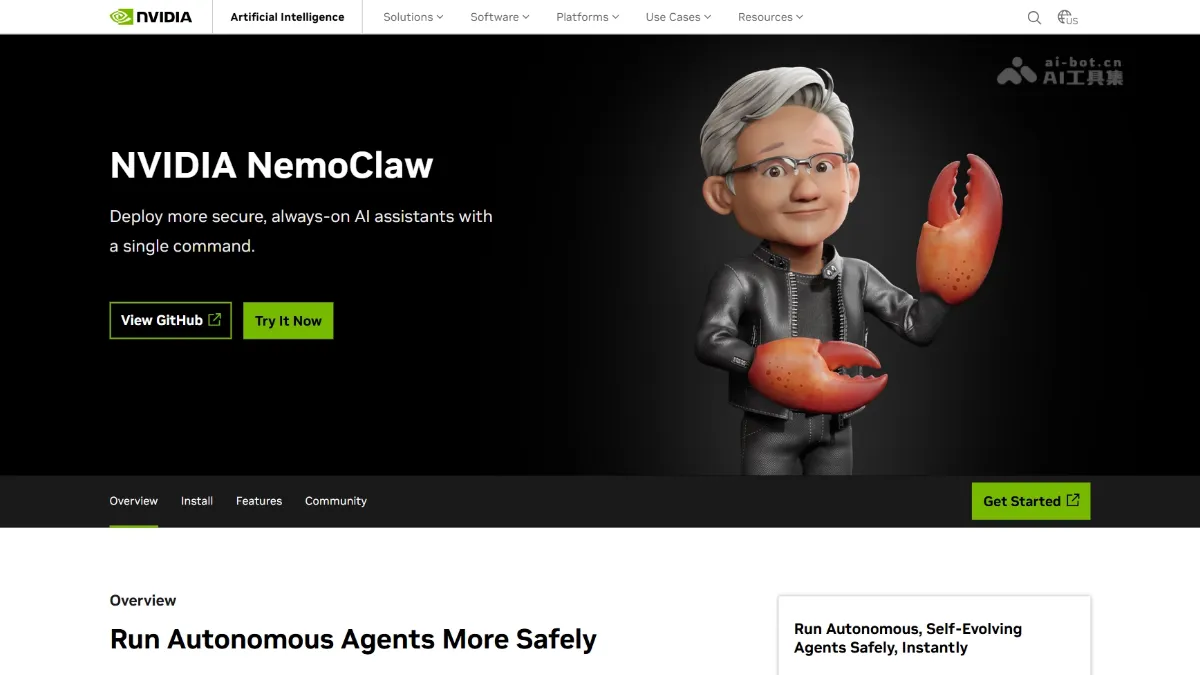
NemoClaw - NVIDIA's open-source enterprise-grade AI agent framework
Homepage • AI Tools • AI Projects and Frameworks • NemoClaw - NVIDIA's Open-Source Enterprise-Grade AI Agent Framework NemoClaw is an open-source enterprise-grade AI agent framework from NVIDIA. Running as a plugin for OpenClaw, NemoClaw provides a security sandbox and policy engine through the OpenShell runtime, addressing the challenges of enterprise AI...
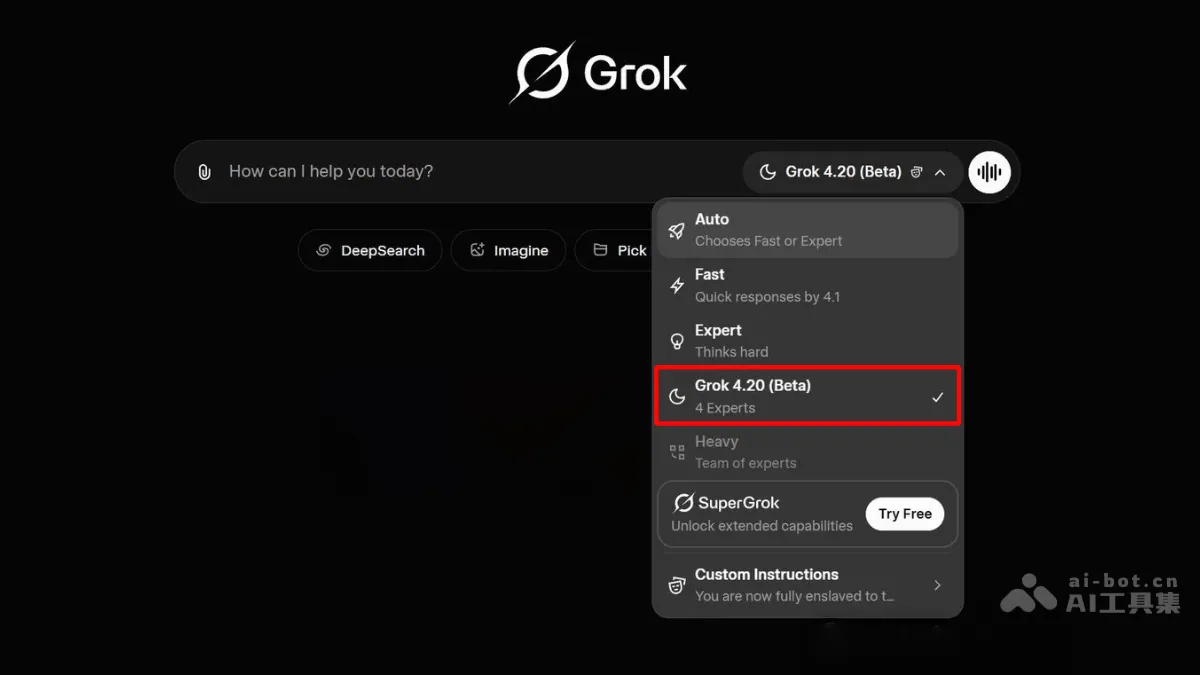
Grok 4.20 - xAI's next-generation multi-agent AI model
Grok 4.20 is a next-generation multi-agent AI system launched by xAI, a company under Elon Musk. It employs a revolutionary "four-agent collaborative architecture," featuring four specialized agents: Team Leader Grok, Research Expert Harper, Logic Expert Benjamin, and Creative Expert Lucas. Through parallel thinking, multiple rounds of internal discussion, and peer review mechanisms, the system achieves highly efficient collaboration similar to a human expert team while maintaining machine-level operating speed. Grok 4.20 boasts a MoE architecture with approximately 3T parameters and supports 256K...