DeerFlow 2.0 - ByteDance's open-source super intelligent agent framework | AI toolkit
DeerFlow 2.0...
DeerFlow 2.0 is ByteDance’s open source super-agent framework, which adopts the “main agent + 11-layer middleware chain + dynamic sub-agent” architecture to achieve multi-agent collaboration through LangGraph. The framework has built-in 10+ pluggable skills such as in-depth research, data analysis, and audio and video creation, and supports Docker/K8s isolation sandbox execution. Natively adapted to Feishu, Telegram, and Slack, it can run without the need for a public IP. Version 2.0 has been upgraded from a single research tool to a general-purpose agent runtime, supporting complex task processing from minutes to hours, and can generate websites, PPTs, comics and other content with one click.
Key features of DeerFlow 2.0
- agent architecture : Adopt a collaboration model of overall planning by the main agent and parallel execution of dynamic sub-agents to achieve efficient decomposition and collaborative processing of complex tasks.
- Pluggable skill system : Built-in more than 10 skill modules such as in-depth research, data analysis, PPT generation, and web design, supporting users to customize and expand new capabilities through MCP interfaces and Python functions.
- Isolate sandbox execution : Provides three operating modes: local, Docker and Kubernetes, and creates an independent container environment for each task based on Byte AIO Sandbox to ensure execution security and resource isolation.
- context engineering : Systematically solve the problem of insufficient context windows in long-term tasks through mechanisms such as automatic summary compression, external storage of intermediate results, and subtask current limiting.
- long term memory : Supports cross-session persistent storage of user portraits, preferences, and accumulated knowledge, and all data is saved locally and fully controlled by the user.
- IM channel integration : Natively adapted to the three major instant messaging platforms Feishu, Telegram and Slack, it can interact with agents through commands without requiring a public IP address.
- Compatible with multiple models : Supports mainstream large models such as OpenAI, Gemini, DeepSeek, and Doubao Seed, and flexibly switches between different underlying capabilities through a unified configuration interface.
Key information and usage requirements for DeerFlow 2.0
- Project background : ByteDance’s open source super-agent framework, using the MIT license.
- Release time : Version 2.0 was officially released on February 28, 2026, and topped the list of GitHub Trending on the day of release.
- core positioning : Comprehensive upgrade from the in-depth research tool of version 1.0 to a general agent runtime (Super Agent Harness).
- mission capability : Supports processing of complex multi-step tasks ranging from minutes to hours, covering a variety of scenarios such as research, coding, and creation.
- Python version : Requires Python 3.12 or higher to be installed on the system.
- Node.js version : Requires the system to have Node.js 22 or higher installed.
- Package manager : Need to install pnpm and uv as front-end and back-end package management tools.
How to use DeerFlow 2.0
- Clone repository :Execute
git clone https://github.com/bytedance/deer-flow.gitClone the project locally and enter the project directorycd deer-flow. - Generate configuration :Run
makeconfigAutomatically generatedconfig.yamland.envconfiguration file. - Configure model :edit
config.yamlfile, add the required model (such as GPT-4, Gemini, DeepSeek, Beanbao, etc.), and set parameters such as model name, API type, key variable, etc. - set key : in
.envFill in the API key of each service provider in the file, such asOPENAI_API_KEY=your-key. - Choose deployment method Docker way :Execute
make docker-initPull the sandbox image and execute it againmake docker-startStart the service. - local mode :Execute
make checkCheck dependencies and then executemake installInstall dependencies and finally executemakedevStart the service. access use : Open the browser and visit http://localhost:2026 to enter the web interface and enter the task instructions to start using it. IM channel access : inconfig.yamlOpen Feishu, Telegram or Slack configuration, set the App ID, key and other parameters of the corresponding platform, and interact with DeerFlow through commands in the chat software.
DeerFlow 2.0 project address
- Project official website :https://deerflow.tech
- GitHub repository :https://github.com/bytedance/deer-flow
Comparison of similar competing products of DeerFlow 2.0
| Contrast Dimensions | DeerFlow 2.0 | JVS Claw (Alibaba) | QClaw (Tencent) |
|---|---|---|---|
| Developer | ByteDance | Alibaba Cloud | Tencent |
| Open source agreement | MIT (fully open source) | Closed source | Closed source |
| core architecture | Main agent + 11-layer middleware chain + dynamic sub-agent | Based on OpenClaw packaging | Based on OpenClaw minimalist packaging |
| Deployment method | Docker/local/K8s, supports privatization | You need to apply for an invitation code and use it in the cloud | Need to apply through Tencent channels |
| Sandbox mechanism | Byte AIO Sandbox, three-level isolation | Inherit the OpenClaw sandbox | Inherit the OpenClaw sandbox |
| Skill expansion | Pluggable Skill system supports customization | Preset skills + custom extensions | Preset skills + inspiration square |
| IM integration | Native support for Feishu, Telegram, and Slack | No native IM support yet | WeChat Mini Program “QClaw Butler” |
| memory ability | long-term memory, local storage | Inherit OpenClaw memory mechanism | Inherit OpenClaw memory mechanism |
Application scenarios of DeerFlow 2.0
- in-depth research : Automatically collect multi-source information and generate research reports, suitable for complex information processing tasks such as academic research, competitive product analysis, and industry research.
- web development : Generate complete and deliverable website pages with one click, automating the entire process from UI design to front-end code, such as football league official website, 3D interactive weather interface, etc.
- content creation : Transform complex concepts into child-friendly educational comics, or automatically generate multimedia materials such as PPT, podcast scripts, and video content.
- data analysis : Automatically perform data-driven tasks such as data cleaning, visual chart generation, and business intelligence report writing. ©
You May Also Like
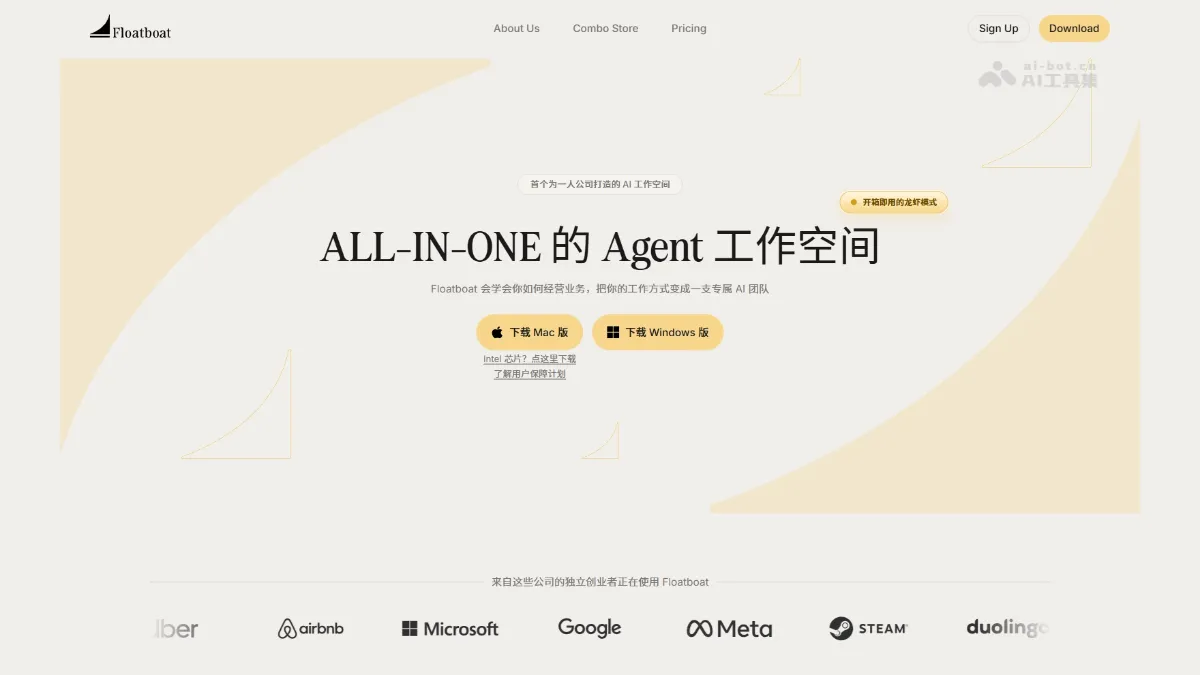
Floatboat - A native workspace for AI agents, designed specifically for...
Floatboat is the first AI workspace designed for one-person companies. The platform transforms the entire computer into an Agent runtime environment, allowing local files, browsers, and AI dialogues to flow freely within a single interface, eliminating friction in information transfer. Floatboat's innovation lies in Combo Skills, which solidify repetitive tasks into reusable Standard Operating Procedures (SOPs) that automatically evolve with use. The platform includes over 3500 built-in tool connections and supports direct access to native macOS applications. Floatboat's main features include: Workspace: Agent...
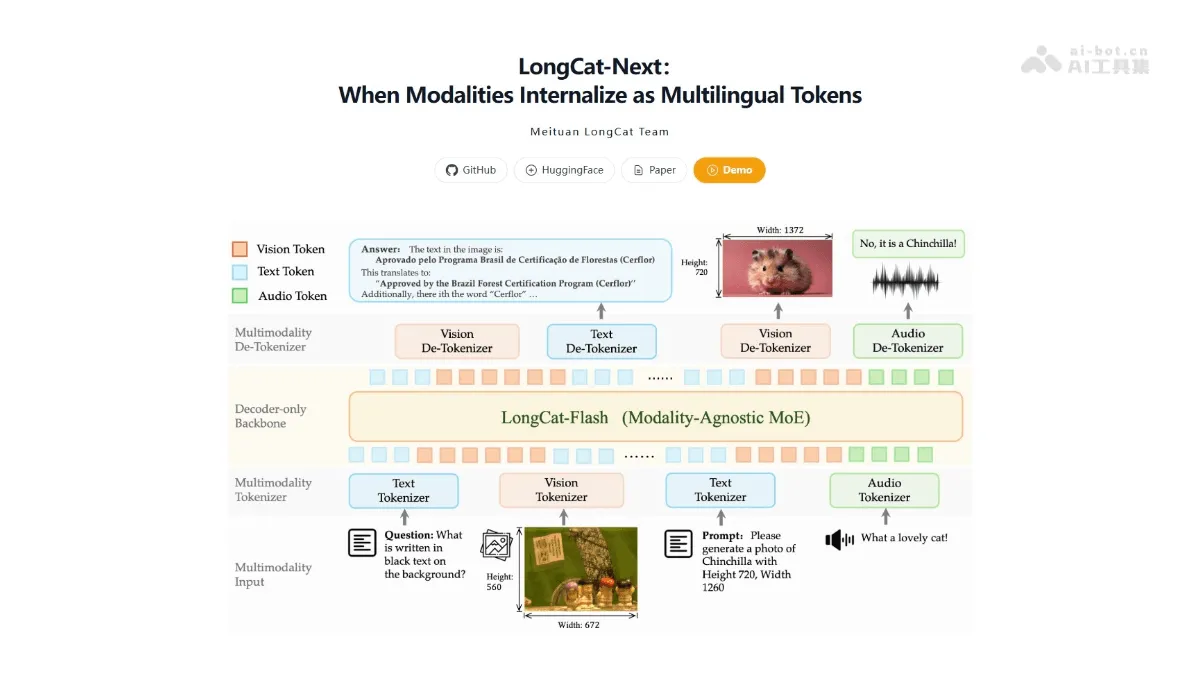
LongCat-Next - Meituan's LongCat multimodal model
LongCat-Next is a multimodal model launched by Meituan's LongCat, with its core innovation being the LoZA sparse attention mechanism. The model intelligently screens the importance of modules, replacing 50% of the less important modules with streaming sparse attention, forming a ZigZag structure that interweaves global and local attention.
DeepSpeed-MII - Microsoft DeepSpeed's open-source model inference library
DeepSpeed-MII is an open-source Python library from the DeepSpeed team that provides efficient model inference. DeepSpeed-MII significantly improves inference throughput and reduces latency using innovative techniques such as blocking key-value caching, sequential batch processing, and dynamic SplitFuse, demonstrating excellent performance when handling large language models.
WindClaw - An AI-powered investment research platform that deeply integrates professional financial databases
WindClaw...