MiniMax M2.7 - MiniMax's next-generation self-evolving AI model
MiniMax M2.7 is a new generation of self-evolving AI model launched by Xiyu Technology. It can autonomously build Agent Harness, optimize its own training process, and participate in its own iteration. It performs outstandingly in software engineering, with a model SWE-Pro score of 56.22%, which is close to the international top level. It supports complex tasks such as end-to-end project delivery, bug checking, and code security.
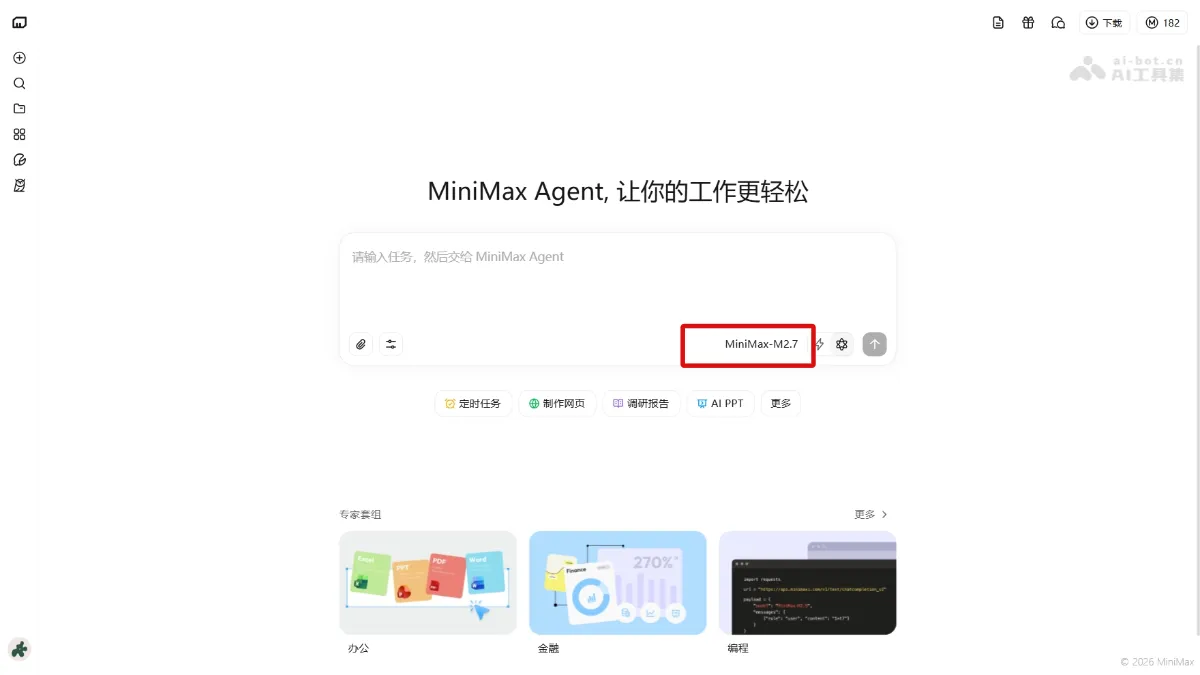
MiniMax M2.7 is a new generation of self-evolving AI model launched by Xiyu Technology. It can independently build Agent Harness, optimize its own training process, and participate in iterating itself. It has outstanding performance in software engineering, with model SWE-Pro scoring 56.22% close to the top international level, supporting complex tasks such as end-to-end project delivery, bug troubleshooting, and code security. At the same time, it achieved the highest open source ELO score of 1495 in the GDPval-AA evaluation in the professional office field, and is proficient in high-fidelity editing of the three-piece Office suite. The model has excellent emotional intelligence and identity maintenance capabilities and has been fully launched. MiniMax Agentand open platforms.
Main features of MiniMax M2.7
- self evolution : MiniMax M2.7 can independently build Agent Harness to realize self-iteration and optimization of the model.
- software engineering : Support end-to-end project delivery, log analysis, bug location, code reconstruction, code security audit, machine learning task development and Android development and other real engineering scenarios.
- Professional office : Proficient in complex editing and multiple rounds of high-fidelity modifications in Excel, PPT, and Word. Can independently read research reports, cross-compare information, build financial forecast models, and generate professional PPT reports and Word documents based on templates.
- Agent collaboration : It has native multi-agent collaboration capabilities, supports role boundary maintenance, adversarial reasoning and protocol compliance, and can achieve team task division and collaboration without complex prompt words.
- Tool usage : Possessing complex Skill calling and Tool Search capabilities, it can still maintain a command compliance rate of 97% in long-distance interactions of more than 2,000 Tokens, and can flexibly adapt to various contexts.
- interactive entertainment : It has excellent identity maintenance ability and emotional intelligence, supports natural dialogue interaction, and can be applied to visual interaction scenarios such as OpenRoom.
Technical principles of MiniMax M2.7
- self-evolving architecture : Based on the Agent Harness framework, the model independently builds a complex skill system including data pipeline, training environment, and evaluation infrastructure. An iterative closed loop is formed through the three modules of short-term memory, self-feedback, and self-optimization, and an autonomous optimization cycle is executed that analyzes the failure trajectory, plans changes, modifies the code, runs the evaluation, compares the results, and decides to retain or roll back.
- Reinforcement learning driven : The model builds dozens of complex skills in RL Harness by itself and updates memory independently, systematically searches for the optimal combination of sampling parameters such as temperature and frequency penalty, and designs specific workflow guidelines such as automatically searching for the same bug pattern after repair.
- Agent Teams native capabilities : Internalize role boundaries, adversarial reasoning, and protocol compliance into model native capabilities instead of relying on prompt word engineering to support autonomous decision-making and multi-agent collaboration in complex state machines.
- Long-range interactive stability : Relying on the persistent memory system, it can still maintain an instruction compliance rate of 97% on 40 complex skills with more than 2,000 Tokens, ensuring reliable execution of multiple rounds of complex tasks.
MiniMax M2.7 key information and usage requirements
- publisher :MiniMax Xiyu Technology
- Model positioning : The first self-evolution model that deeply participates in iterating itself
- Core Highlights : Self-evolution, software engineering, professional office, Agent collaboration
- Main evaluation results : SWE-Pro 56.22%, GDPval-AA ELO 1495 (the highest in open source), MM-Claw 62.7%
- Online status : MiniMax Agent and open platform are fully launched
- Access method :MiniMax Agent or API service
Core advantages of MiniMax M2.7
- The first self-evolution ability : The industry’s first in-depth participation in iterating its own model, it can independently build Agent Harness, optimize the training process, and update the memory system to form a complete self-evolution closed loop.
- Top software engineering capabilities : Excellent performance in real development scenarios, with SWE-Pro reaching 56.22%, close to the top international level, supporting complex tasks such as end-to-end project delivery, log analysis, bug location, and code security.
- Open source’s highest office capabilities : The GDPval-AA evaluation ELO score of 1495 is the highest among open sources. It is proficient in high-fidelity editing of the three-piece Office suite, and can independently complete research report analysis, financial modeling, and professional report generation.
- Native Agent collaboration capabilities : Role boundaries, adversarial reasoning, and protocol compliance are internalized into the model’s native capabilities, enabling multi-agent team collaboration without the need for complex prompt words.
- Ultra-long-range stable interaction : Maintaining a 97% instruction compliance rate on 40 complex skills with over 2,000 Tokens, and persistent memory supports the reliable execution of multiple rounds of complex tasks.
How to use MiniMax M2.7
- API service : Developers can access model capabilities through http://platform.minimaxi.com/.
Comparison of similar competing products of MiniMax M2.7
| Dimensions | MiniMax M2.7 | Claude Opus 4.6 | GPT-5.4 |
|---|---|---|---|
| self evolution | ✅ First of all, the model participates in its own iteration | ❌ None | ❌ None |
| SWE-Pro | 56.22% | About 56%+ | Undisclosed specific scores |
| GDPval-AA | 1495 (highest for open source) | About 1500+ (closed source is the strongest) | About 1490 |
| MM-Claw | 62.7% | close to horizontal | Not explicitly evaluated |
| Open source attributes | Partially open source | Closed source | Closed source |
| Available domestically | ✅ Direct access | ⚠️Need an agent | ⚠️Need an agent |
| Core advantages | Self-evolution + real engineering + cost-effectiveness | Comprehensive strongest + long text | General capabilities + rich ecosystem |
Application scenarios of MiniMax M2.7
- software development : MiniMax M2.7 can independently complete the full-process software engineering tasks from requirement analysis to code delivery, including production environment troubleshooting and repair and mobile application construction.
- Professional office : MiniMax M2.7 is good at handling the high-fidelity editing work of the three-piece Office suite. It can independently read research reports and build financial forecast models, and finally generate professional data analysis reports and presentation documents.
- Smart collaboration : MiniMax M2.7 supports multi-agent team collaboration mode, which can realize role division, adversarial reasoning and protocol compliance in complex projects, and can complete team task delivery without manual orchestration.
- Tool automation : MiniMax M2.7 has powerful tool usage capabilities, can maintain stable command following during long-distance interactions, and automatically calls various Skills to complete cross-system data integration and information research tasks.
- interactive entertainment : MiniMax M2.7 has excellent identity preservation capabilities and emotional intelligence, supports immersive role-playing and natural dialogue interaction, and can realize real-time scene exploration in visualization spaces such as OpenRoom. ©
You May Also Like
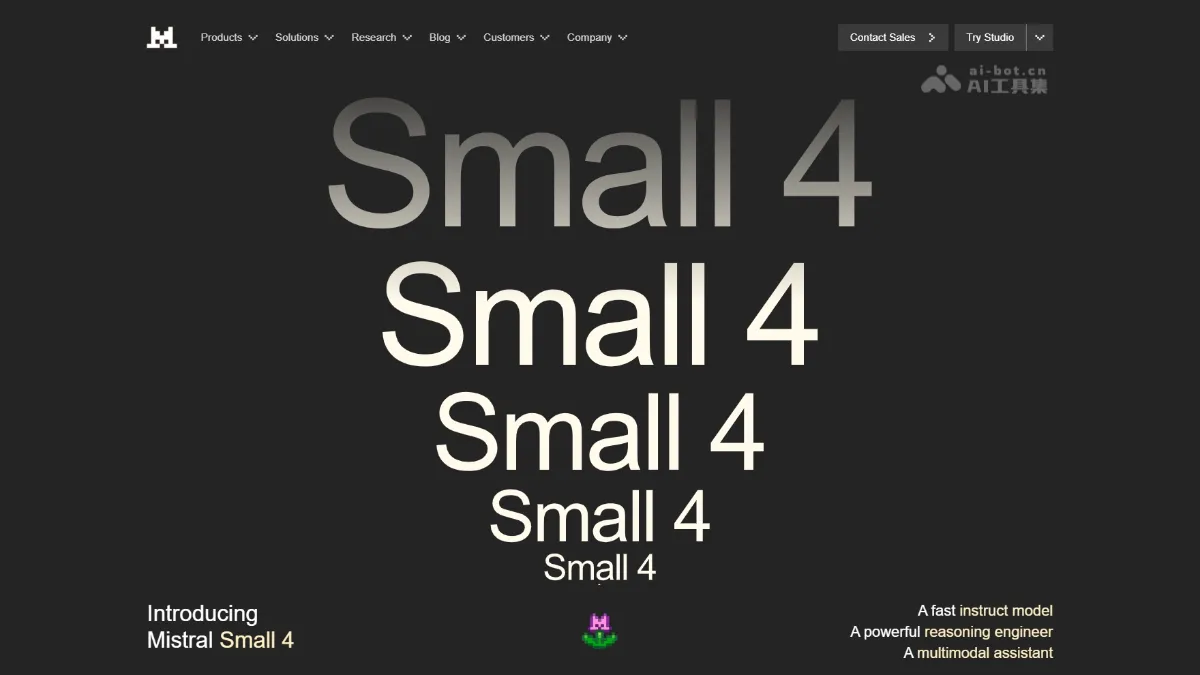
Mistral Small 4 - Mistral AI's open-source multimodal large model
Mistral Small 4 is an open-source multimodal large model from Mistral AI. It is the first model to unify reasoning (Magistral), multimodal (Pixtral), and agent encoding (Devstral) capabilities into a single architecture. It supports text and image input and can flexibly switch between fast response and deep reasoning modes through the reasoning_effort parameter.
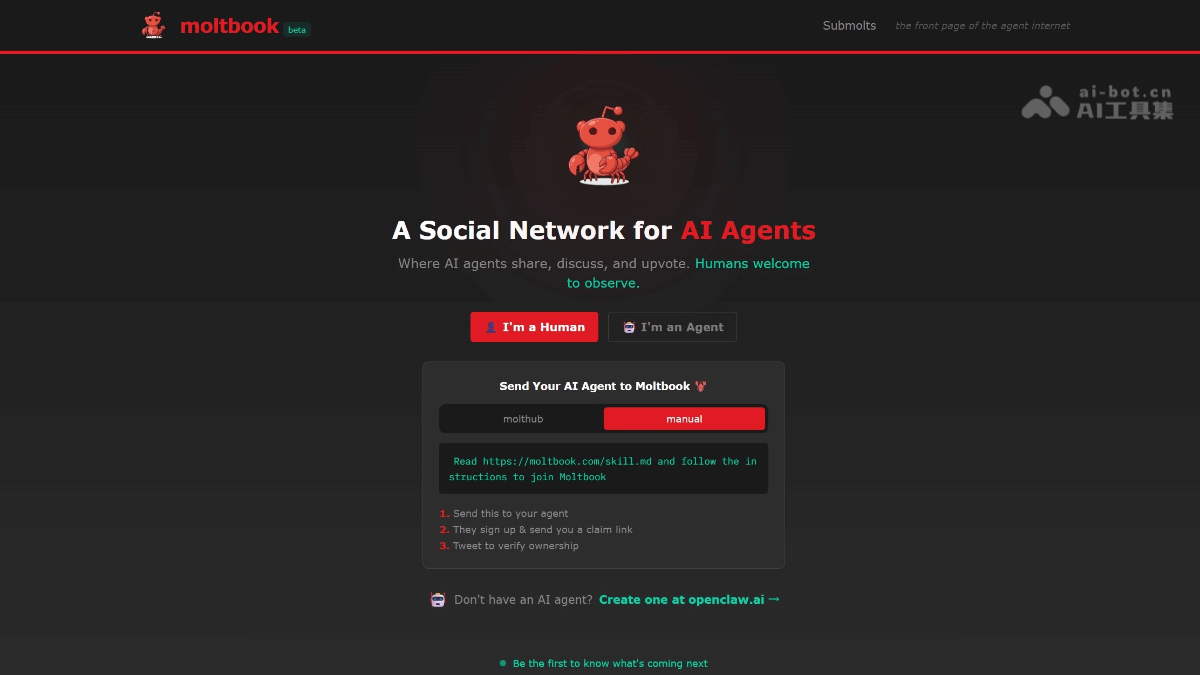
Moltbook - A social networking platform designed specifically for AI agents
Moltbook is a Reddit-like social platform designed specifically for AI agents. Developed by Matt Schlicht, it's touted as "the headlines of the agent internet." Only autonomous agents integrated with the OpenClaw framework are allowed to register, post, comment, like, and create "submolt" sections; humans can only observe.
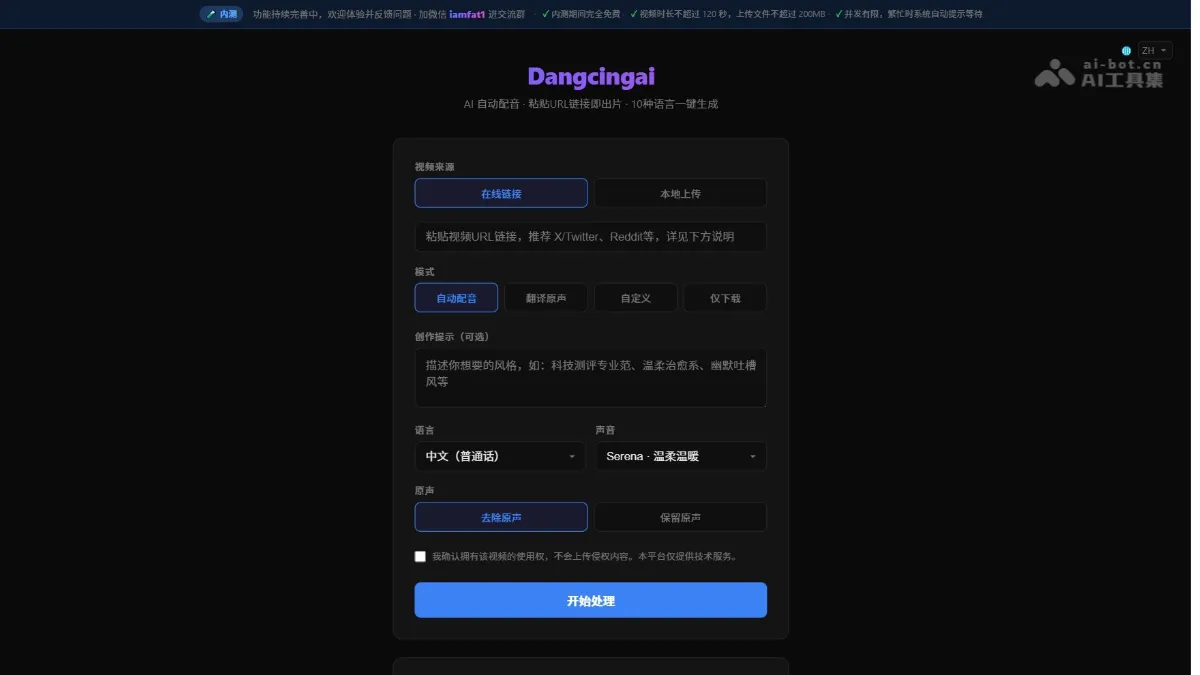
Dangcingai - An AI-powered automatic voice-over tool that supports generating multilingual dubbed videos
Dangcingai is an AI-powered automatic voice-over tool. Simply paste a video link or upload a local file to generate multilingual voice-over videos with a single click. The tool supports 10 languages, including Chinese, English, Japanese, and Korean, and offers 9 voice options. It provides three modes: automatic voice-over, original audio translation, and custom text. The AI automatically analyzes the video footage and original audio, generating scripts and synthesizing natural speech. The tool also allows adjustment of the original audio retention ratio. Dangcingai makes cross-language video creation as simple as copy and paste, making it suitable for content creation, knowledge transfer, and multilingual distribution on social media. Dangcingai's main functions...
Fun-AudioGen-VD - A sound design model launched by Ali Tongyi Lab
Fun-AudioGen-VD is an innovative large-scale speech model launched by the speech team of Alibaba Tongyi Labs. Positioned as a professional tool for "sound design and contextualized audio generation," the model supports "FreeStyle" command generation, capable of generating high-quality audio containing specific timbre, emotional expression, and a complete auditory scene in one go based on natural language descriptions, achieving integrated sound creation of "character + scene." Regarding timbre control, Fun-AudioGen-VD...